Vanguards: Masters of Middle Eastern Contemporary Art
— The Arts Club, Dubai
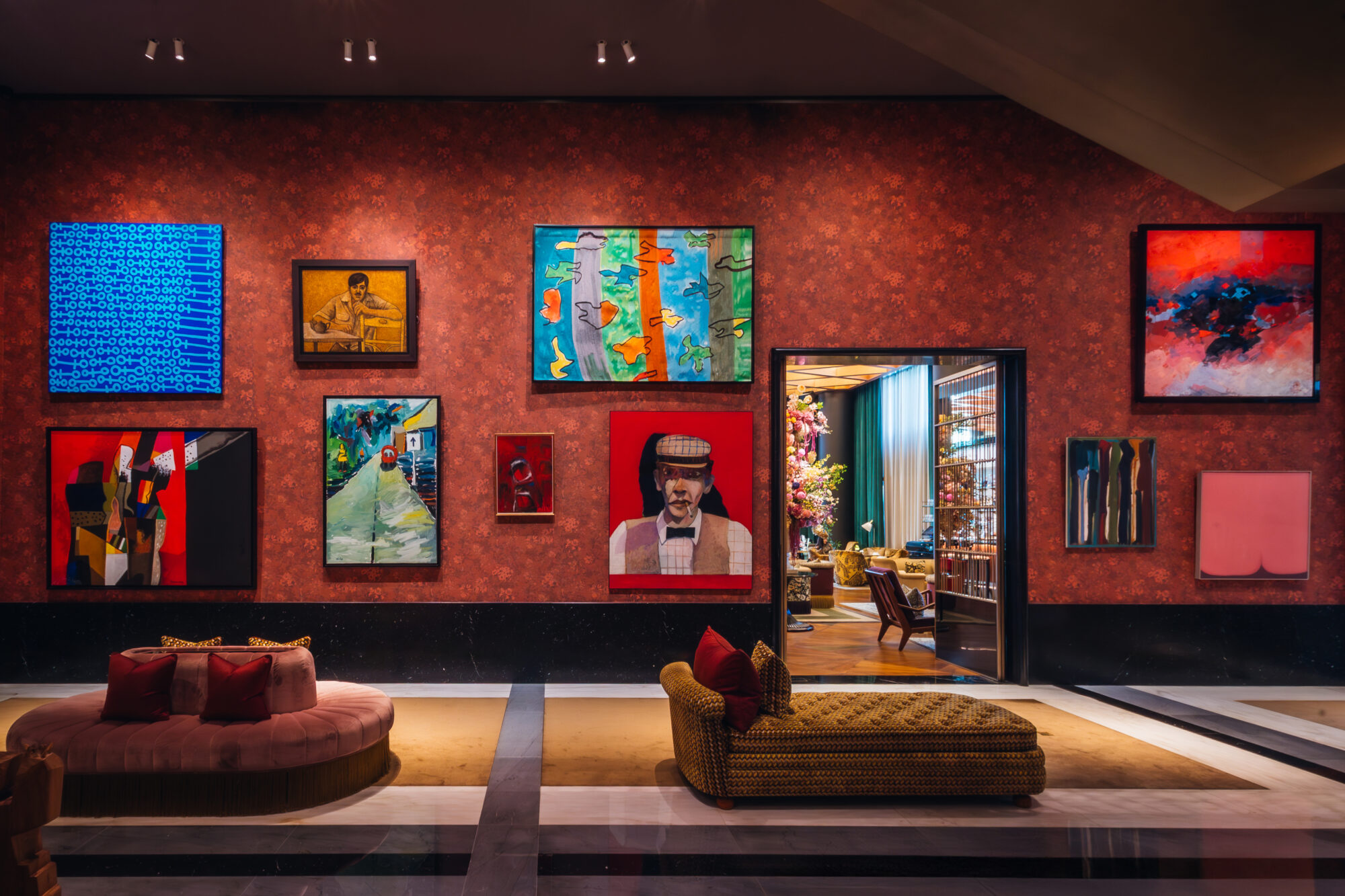
Installation view: Vanguards: Masters of Middle Eastern Contemporary Art, The Arts Club, Dubai.
Installation view: Vanguards: Masters of Middle Eastern Contemporary Art, The Arts Club, Dubai.
Tap to view slideshow
The installation brings together pioneering artists whose practices shaped the visual language of Middle Eastern modern and post-war art. Across the Maghreb, the Levant, Iraq, and the Gulf, these artists transformed modernism by grounding it in local material, landscape and memory. Rather than adopting European traditions as fixed models, they reimagined them through the textures, rhythms and histories of their own environments. Working across painting, sculpture, textile and printmaking, the artists in this exhibition developed new visual vocabularies whereby line, surface and material become carriers of cultural continuity and lived experience. Their works reveal a regional conversation in which abstraction, form and gesture articulate a modernism that is both locally grounded and globally resonant.
Landscape emerges as a central thread throughout the exhibition. Across the region, artists respond to environments shaped by political history, social transformation and collective memory. Line, geometric form and rhythmic repetition appear repeatedly as visual strategies through which artists translate landscape into abstraction. The work of Dia Al-Azzawi reflects the political urgency and intellectual energy of Iraq’s modernist circles. The painting and textile work of Etel Adnan offers intimate formats that feel both diaristic and monumental. The installation also features a painting by Saliba Douaihy, whose practice was shaped by the mountainous landscape of northern Lebanon; as well as works by Willy Aractingi, Shafic Abboud, and Paul Guiragossian.
Emerging from the Casablanca Art School in Morocco, artists like Mohamed Melehi sought to redefine modern art by drawing upon vernacular patterns, craft traditions, and popular culture. Their work emphasised the aesthetic potential of everyday life and public space, proposing modernism as a shared cultural experience rather than an elite language. Their works insist on the aesthetic experience of the quotidian, proposing modernism as something to be lived and shared.
Within the Gulf, artists expanded the material possibilities of artistic practice. Hassan Sharif and Mohamed Ibrahim belong to the first generation of contemporary Emirati artists, often referred to as The Five. Their experimental use of everyday materials, repetition and process introduced new approaches to conceptual practice in the United Arab Emirates. Engaging directly with the desert environment and the rhythms of daily life, their work reshaped the boundaries between art, labour and material culture.
Artists in the exhibition also explore the human figure as a site of experimentation; Huguette Caland’s paintings dissolve body and line into playful, daring landscapes that blur the boundaries between abstraction and figuration. Marwan Kassab-Bachi transforms the human face into a terrain of painterly excavation, where portraiture is a site of psychological exploration rather than likeness. One of Bahrain’s foremost artists Abdul Rahim Sharif’s paintings express themes such as alienation, indifference, hardship, introversion and emotional disconnection using vibrant colours and portraiture.
Sculpture, finally, offers another register of permanence and touch. Works by Mohamed Ibrahim and Chaouki Choukini examine abstracted human and animal forms through papier mâché and carved wood.
We would like to thank Barjeel Art Foundation, Sharjah, The Farjam Collection, Ramin Salsali SPM Collection, The Yes Collection, Green Art Gallery, Lawrie Shabibi, and Waddington Custot, whose loaned works have been integral in bringing this exhibition to fruition.